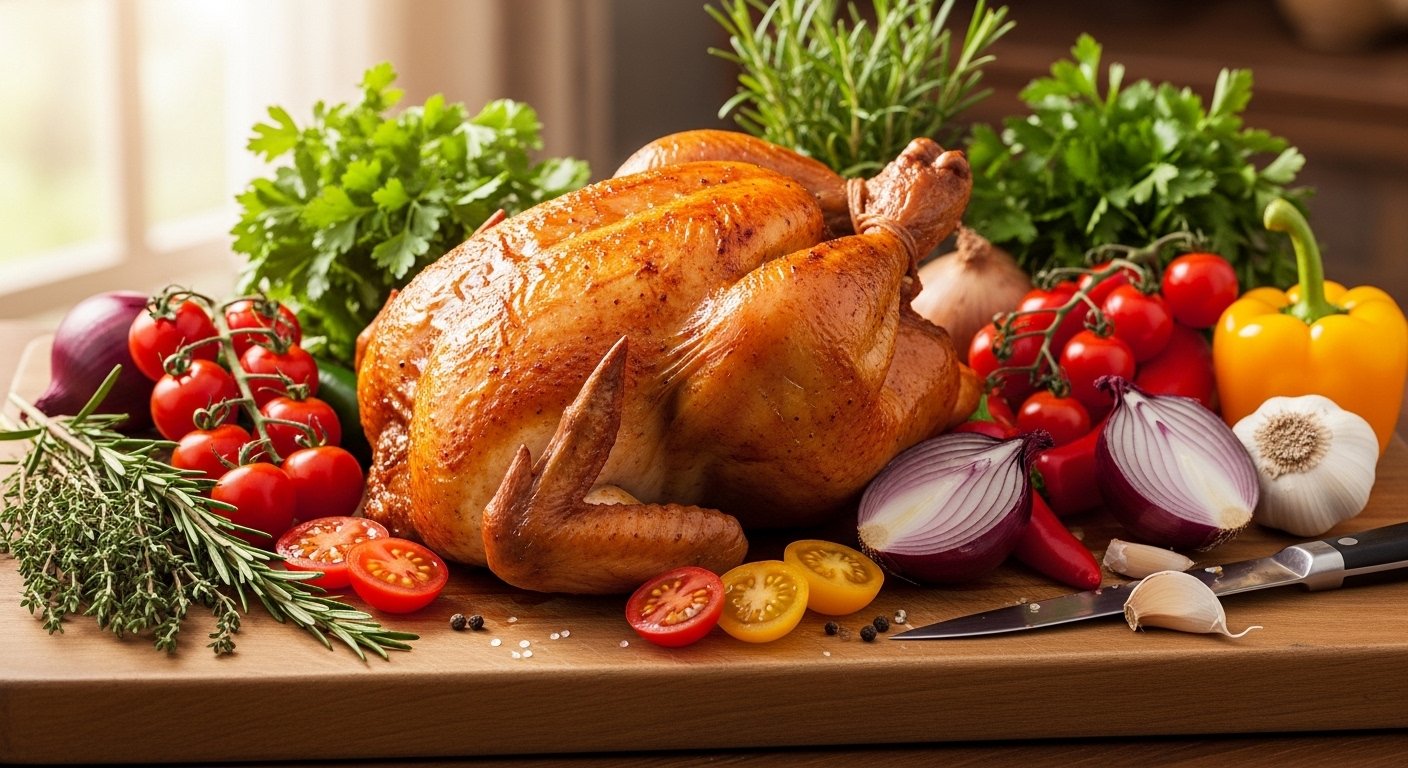
Have you ever grabbed one of those steaming hot Costco chickens from the back of the store, drawn in by the irresistible aroma and unbeatable price? That rotisserie bird, priced at just $4.99 in the U.S. (and around $7.99 in Canada), has become a staple for busy families and budget shoppers alike. But what if I told you there’s more to this poultry powerhouse than meets the eye? From its role as a clever loss leader strategy to the debates over poultry welfare standards and factory farming practices, this article uncovers the full story. Let’s dive in and explore why this warehouse club perk is both a bargain and a topic of controversy.
Key Points
- Great Value with a Catch: The $4.99 price point draws customers in, but Costco reportedly loses $30-40 million annually on these birds to boost overall sales.
- Health Considerations: While convenient and protein-packed, the chicken’s high sodium content (460mg per 3-ounce serving) and added ingredients like sodium phosphate raise questions for health-conscious eaters.
- Ethical Debates: Research suggests overcrowding and rapid growth in production facilities lead to animal welfare issues, though Costco maintains high standards.
- Versatile in the Kitchen: Perfect for quick meals, with endless ways to repurpose leftovers, making it a favorite among home cooks.
- Ongoing Controversies: Lawsuits highlight concerns over preservatives and salmonella risks, but evidence leans toward it being safe when handled properly.
Why It’s a Loss Leader
Costco’s rotisserie chicken isn’t just cheap; it’s a deliberate business move. Known as a loss leader strategy, the company sells these birds below cost to lure shoppers deeper into the store, where they often load up on higher-margin items like wines or side dishes. According to reports, each chicken costs about $6-7 to produce when factoring in labor and packaging, yet the price has stayed steady since 2009. This approach has helped Costco sell over 100 million birds yearly, turning potential losses into overall gains.
In Canada, prices hover around $7.99 due to regional differences, but the strategy remains the same. Shoppers rave about the value, with many noting it feeds a family for multiple meals. For ethically minded consumers, though, this low price raises questions about how it’s achieved.
Nutritional Breakdown and Health Insights
Is Costco chicken healthy to eat? It depends on your priorities. A 3-ounce serving packs 19 grams of protein with low carbs, making it keto-friendly. However, the sodium content in processed meat stands out: 460mg per serving, which is about 20% of the daily recommended limit. Why is Costco chicken so salty? It’s injected with a brine solution including salt and sodium phosphate to keep it juicy.
Here’s a quick comparison of sodium levels in popular rotisserie chickens:
| Brand | Sodium per 3oz Serving (mg) | Notes |
|---|---|---|
| Costco | 460 | Includes brine for moisture |
| Walmart | 250 | Lower salt option |
| Whole Foods | 60-120 | Often organic, minimal additives |
| Sam’s Club | 550 | Highest in comparison |
For those watching sodium, pair it with low-salt sides like fresh veggies. The Costco chicken ingredients list includes: whole chicken, water, salt, sodium phosphate, modified food starch (potato, tapioca), potato dextrin, carrageenan, sugar, dextrose, and spice extractives. No artificial preservatives, but recent lawsuits claim additives like carrageenan function similarly, though experts say they’re safe in moderation.
Culinary Tips and Recipes
Beyond the initial meal, this food court staple shines in leftovers. How to use Costco chicken leftovers? Shred it for salads, soups, or casseroles. Try these simple ideas:
- Chicken Salad: Mix shredded chicken with mayo, celery, and grapes for a quick lunch.
- Tacos or Burritos: Add to tortillas with beans and cheese.
- Soup Base: Simmer bones for broth, then add veggies and noodles.
Best way to reheat Costco rotisserie chicken? Oven at 350°F for 20 minutes, covered in foil, keeps it moist. Air fryer at 350°F for 5-10 minutes crisps the skin nicely.
If you’ve ever wondered about the journey from farm to fork for that iconic Costco rotisserie bird, you’re not alone. This deep dive explores everything from its Nebraska processing plant origins to the livestock legal battles and ethical concerns with Costco poultry. We’ll cover production practices, health implications, and practical advice, building on the basics to give you a complete picture.
The Production Pipeline: From Farm to Store
Costco’s commitment to the $4.99 price point led to a massive investment in vertical integration. In 2019, the company opened Lincoln Premium Poultry (LPP) in Fremont, Nebraska, a $450 million facility that processes over 100 million chickens annually. This setup allows Costco to control everything from hatching to packaging, supplying about 40% of its U.S. rotisserie chickens and Kirkland raw products.
The plant partners with local farmers under contract systems, where growers raise company-owned birds in barns housing 40,000-47,500 chickens each. Birds are bred for rapid growth, reaching 6 pounds in 42 days, which critics argue leads to health issues like leg deformities. Undercover investigations by groups like Mercy for Animals have revealed crowded barns, ammonia burns from litter, and piles of dead birds. Costco responds by emphasizing audits and commitments to poultry welfare standards, including more humane slaughter methods than industry norms.
Environmental impacts are notable too. The operation generates massive manure volumes, contributing to water pollution in the region. Nebraska residents have reported odors and health concerns from nearby farms, highlighting the trade-offs of factory farming practices.
Ethical and Legal Debates
Ethical concerns with Costco poultry stem from its scale. Animal rights groups point to fast-growth breeds causing suffering, with 7.2 million birds dying pre-slaughter yearly from disease or injury. A 2022 lawsuit alleged violations of Nebraska and Iowa welfare laws, claiming birds grow too large too quickly, leading to neglect. Costco denied wrongdoing, stating it upholds high standards.
More recently, salmonella issues have surfaced. Farm Forward’s 2025 analysis showed the Fremont plant failing USDA tests 92% of the time since 2019, with Category 3 ratings indicating high contamination (over 9.8% for whole chickens, 15.4% for parts). Despite this, products reach shelves as the USDA lacks authority to halt operations. A February 2026 lawsuit seeks damages over these risks, though Costco reports no major recalls.
Counterarguments note Costco’s improvements, like signing the Better Chicken Commitment in 2021 for better welfare. Still, debates persist, with some boycotting due to factory farming ties.
Health and Nutrition in Depth
Diving deeper: Is Costco chicken healthy to eat? It offers lean protein (19g per 3oz) and nutrients like B vitamins, but the brine boosts sodium, potentially risky for hypertension. Why is Costco chicken so salty? The solution enhances flavor and juiciness, but alternatives like Whole Foods have far less (60mg).
Full Costco chicken ingredients list: Whole chicken, water, seasoning (salt, sodium phosphate, modified food starch (potato, tapioca), potato dextrin, carrageenan, sugar, dextrose, spice extractives). No gluten or MSG, but a 2026 lawsuit claims sodium phosphate and carrageenan act as preservatives, contradicting “no preservatives” labels. Experts clarify they’re for texture, not preservation, and FDA-approved.
For balance, enjoy in moderation: Remove skin to cut fat, and pair with veggies.
Creative Culinary Applications
Home cooks love the versatility. Costco chicken prices in Canada vary ($7.99-$8.99), but value shines in multi-meal use. Recipes for leftovers:
- Million Dollar Chicken Casserole: Mix shredded chicken with cream cheese, cottage cheese, and Ritz crackers; bake for comfort food.
- Creamy Green Curry Ramen: Add to noodles with coconut milk and veggies.
- Copycat Chicken Bake: Stuff pizza dough with chicken, bacon, and Caesar dressing.
Best way to reheat: Oven (350°F, 20-30 min covered), air fryer (350°F, 3-6 min), or microwave (damp towel, 30-sec bursts). Store shredded in freezer bags for up to 3 months.
Regional Variations and Consumer Tips
In Canada, expect slight price hikes due to supply chains, but the product mirrors U.S. versions. For ethical shoppers, seek Certified Humane labels elsewhere. Always check for recalls, though Costco’s track record is strong.
Actionable Takeaways
- Budget Smart: Use one bird for 2-3 meals to maximize value.
- Health Hack: Rinse or remove skin to reduce sodium.
- Ethical Step: Support welfare reforms by choosing humane alternatives occasionally.
What’s your go-to way to enjoy this staple? Share in the comments!
You May Also Like: What is Jalbiteblog? Your New Favorite Source for Recipes
FAQs
Is Costco chicken healthy to eat?
It’s a good protein source but high in sodium; moderate intake is key.
How to use Costco chicken leftovers?
Shred for salads, soups, or casseroles like chicken enchiladas.
Costco chicken lawsuit updates?
Recent suits focus on preservatives and salmonella, but no major resolutions as of 2026.
Why is Costco chicken so salty?
Brine injection enhances flavor and moisture.
Ethical concerns with Costco poultry?
Fast-growth breeds and overcrowding are criticized, though Costco claims high standards.
Costco chicken prices in Canada?
Around $7.99, varying by location.
Best way to reheat Costco rotisserie chicken?
Oven at 350°F for 20 minutes keeps it juicy.