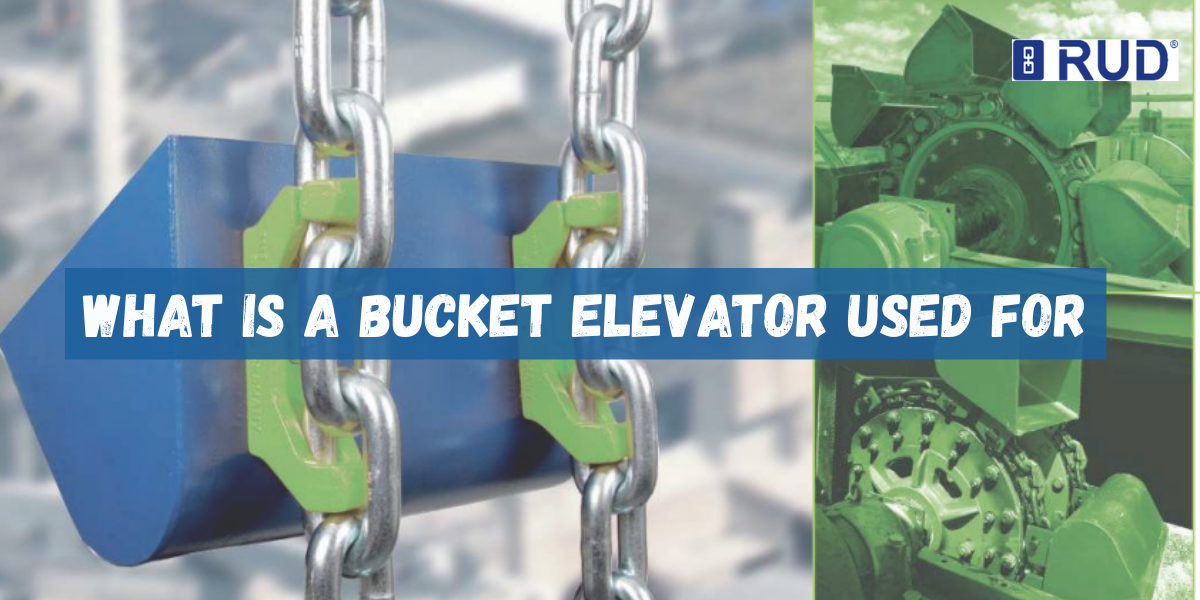
A bucket elevator is used to transport bulk materials vertically between different levels of a facility. These conveyors are common across mining, cement, agriculture, and food processing because large volumes of material need to move upward efficiently.
The challenge is that not every bucket elevator suits every application. And choosing the wrong type or ignoring how the system actually works can lead to unplanned downtime, as well as expensive repairs. We’ve seen it happen more times than we’d like to admit.
At RUD Engineering, we manufacture and supply chain bucket elevator systems built for demanding conditions across Australia. This guide walks you through how these elevators operate, what the key components do, and how to match the right solution to your site.
So if you’re specifying, maintaining, or upgrading elevators, keep reading.
What Is a Bucket Elevator and How Does It Work?
A bucket elevator is a vertical conveying system that uses buckets on a chain or belt to lift bulk materials from one level to another. You might also hear it called a grain leg, which is a common term in agricultural applications.
The way it works is fairly simple. Buckets attached to the belt or chain scoop material at the bottom of the system, which is called the boot section. From there, the buckets travel upward and discharge the material at the top, known as the head section.
In other words, the whole system runs in a continuous loop. The buckets fill up at the boot, ride up through an enclosed casing, empty at the head, and return to the bottom to start again.
This loop allows the elevator to move bulk materials vertically without interruption, which is why you’ll see these conveyors running for hours at a time on most sites.
Basically, the system itself consists of four main components:
- the Boot Section
- the Casing
- the Drive Unit
- and the Head Section
When any one of these fails, the whole elevator stops, so understanding what each part does gives you a head start on keeping things reliable.
Elevator Buckets: Types, Materials and What to Look For
Now, let’s look at the buckets themselves, because the type of elevator buckets you choose has a direct impact on how your system performs.

Centrifugal buckets operate at high speed and use force to fling material out at the discharge point. This makes them a good fit for free-flowing materials like grain, sand, sugar, and dry chemicals. Because the buckets are spaced further apart on the belt, each one fills and empties without interfering with the next.
Continuous discharge buckets work differently. They run at a slower speed and pour material out gently rather than throwing it (and yes, that slower speed is intentional). This gentle handling approach suits fragile or sticky products that would break apart or clump under high force.
Now, the buckets themselves come in a range of materials designed for different conditions. Steel buckets, including mild steel, handle heavy and abrasive loads well, while plastic and nylon options are better suited for lighter duties where reducing belt wear is the priority.
Ultimately, choosing the right bucket sizes and shapes for your application is one of the most economical ways to extend the life of your elevator and avoid unnecessary replacement costs.
How the Head Pulley Controls Bulk Material Handling
The head pulley sits at the top of the bucket elevator and drives the belt or chain around the entire loop. It’s the component that keeps everything moving, and without it, the system has no way to cycle the buckets back down to the boot for reloading.
Believe it or not, the speed of the head pulley also determines how material gets discharged. In centrifugal systems, the pulley spins fast enough to throw material into the discharge chute using force alone. Slower systems, however, rely on gravity instead, where the buckets tip and pour material over the back of the one in front.
Once that’s established, the next thing to consider is pulley size. Because a pulley that’s too small for the chain or belt creates uneven wear and poor discharge accuracy (that’s a risk few operations can afford).
Industries That Rely on High-Capacity Vertical Conveying
Bucket elevators are used across a variety of industries to move large volumes of material vertically. You’ll find high-capacity systems in mining, cement, agriculture, power generation, and food processing, all running daily to keep production on track.
In mining, these elevators transport ore, coal, and crushed minerals between processing stages. The loads are heavy, abrasive, and constant, so the systems need to be built for durability and long life. And frankly, if the elevator can’t keep up with the volume, the entire production line slows down.
Cement and asphalt plants deal with a different challenge. The materials often reach temperatures between 180 and 200°C, which puts serious stress on buckets, chains, and chutes. One such example we’ve worked on involved an asphalt plant in South Australia that was only hitting half its rated capacity because of frequent chain failures.
Agricultural applications rely on bucket elevators just as heavily, especially around grain silos and feed processing. The same goes for power generation and food processing, where efficient vertical conveying keeps materials flowing into silos and across production lines without bottlenecks.
Even in construction, bucket elevators move sand, cement, and aggregates to elevated mixing points that would take twice as long to load manually.
Chain vs Belt Bucket Conveyors: Which One Fits Your Operation
One of the first decisions you’ll face when specifying a bucket elevator is whether to go with a chain or belt drive. Both options power the conveyors reliably, but they suit very different operating conditions.

Chain-driven bucket conveyors handle heavier loads, abrasive materials, and higher operating temperatures. They’re the preferred choice for mining, cement, and asphalt applications where the elevator runs hot and the material is rough on components.
In our experience, most heavy-duty Australian operations tend to favour chains for exactly this reason, because it gives clients longer life out of the system and better reliability over time.
On the other hand, belt-driven elevators cost less upfront and work well for lighter, free-flowing materials like grain and dry powders. The lower total cost of ownership appeals to operations with lower capacity demands, but belt systems do wear faster under heavy or abrasive conditions.
Keeping Your Bucket Elevator Running: Maintenance Basics
Here’s the thing about maintenance. A well-maintained bucket elevator runs longer, breaks down less, and keeps your production line moving. Skipping routine checks is one of the many problems faced by operations that deal with frequent unplanned shutdowns.
The first area to focus on is lubrication, because bearings, chains, and gears build up friction fast when they’re neglected, and that shortens component life quickly. Belt tension is just as important, since both belts and chains stretch over time during operation (loose chains and worn buckets account for most unplanned shutdowns).
That wear also shows up in your buckets and accessories, especially around the boot section, where material loading causes the most abrasion.
Bottom line: You should verify existing elevator setups on a regular schedule to catch small issues before they turn into costly breakdowns.
Get the Right Bucket Elevator for Your Site
Now that you know how bucket elevators work and where they’re used, the next step is matching the right system to your site. That applies to new installations just as much as it does to existing elevators.
If you’re upgrading capacity or verifying existing elevator setups that have been running for years, the decisions we’ve covered here apply directly. And when you get those decisions right early, you spend less time on repairs and more time keeping your elevators at full capacity.
You May Also Like: Modern Fabrication Trends in Construction